ArticleArticle

For researchers. Scores here carry two decimals, as in the paper.Pour la recherche. Les scores ont ici deux décimales, comme dans l’article.

ICLR 2026workshop posteraffiche d’atelier

ArticleArticle

Lost in Translation: Why SOTA LLMs Struggle with French NLU Frontiers

David Beauchemin, Yan Tremblay, Mohamed Youssef, Richard Khoury (2026)

ICLR 2026, Poster in Workshop: I Can't Believe It's Not Better: Where Large Language Models need to improve. This is a workshop poster, not a main-conference paper.C’est une affiche d’atelier, pas un article de la conférence principale.

Read the accepted paperLire l’article accepté

Abstract (English original)Résumé (original anglais)

Despite LLMs' dominance in English, their transferability to French NLU remains inconsistent. To characterize this limitation, we present COLE, a new benchmark comprising 23 diverse French tasks, and use it to reveal significant failure modes in state-of-the-art (SOTA) models. Our analysis reveals three critical negative results: 1) a persistent performance gap where top open-weight models lag behind closed models by over 20%, 2) the illusion of specialization, where surface-level fluency in tuned models masks deep reasoning deficits, and 3) catastrophic failure in zero-shot extractive QA and regional dialect understanding, where many models, including top-tier reasoning models, achieve 0% Exact Match or perform near random baselines. We analyze these unexpected failures to highlight specific frontiers (morphology, cultural nuance) where scaling laws currently fail to generalize.

BibTeX
@inproceedings{beauchemin2026lost,
  title={Lost in Translation: Why {SOTA} {LLM}s Struggle with {F}rench {NLU} Frontiers},
  author={Beauchemin, David and Tremblay, Yan and Youssef, Mohamed and Khoury, Richard},
  booktitle={ICLR 2026 Workshop: I Can't Believe It's Not Better: Where Large Language Models need to improve},
  year={2026},
  url={https://iclr.cc/virtual/2026/10014620}
}
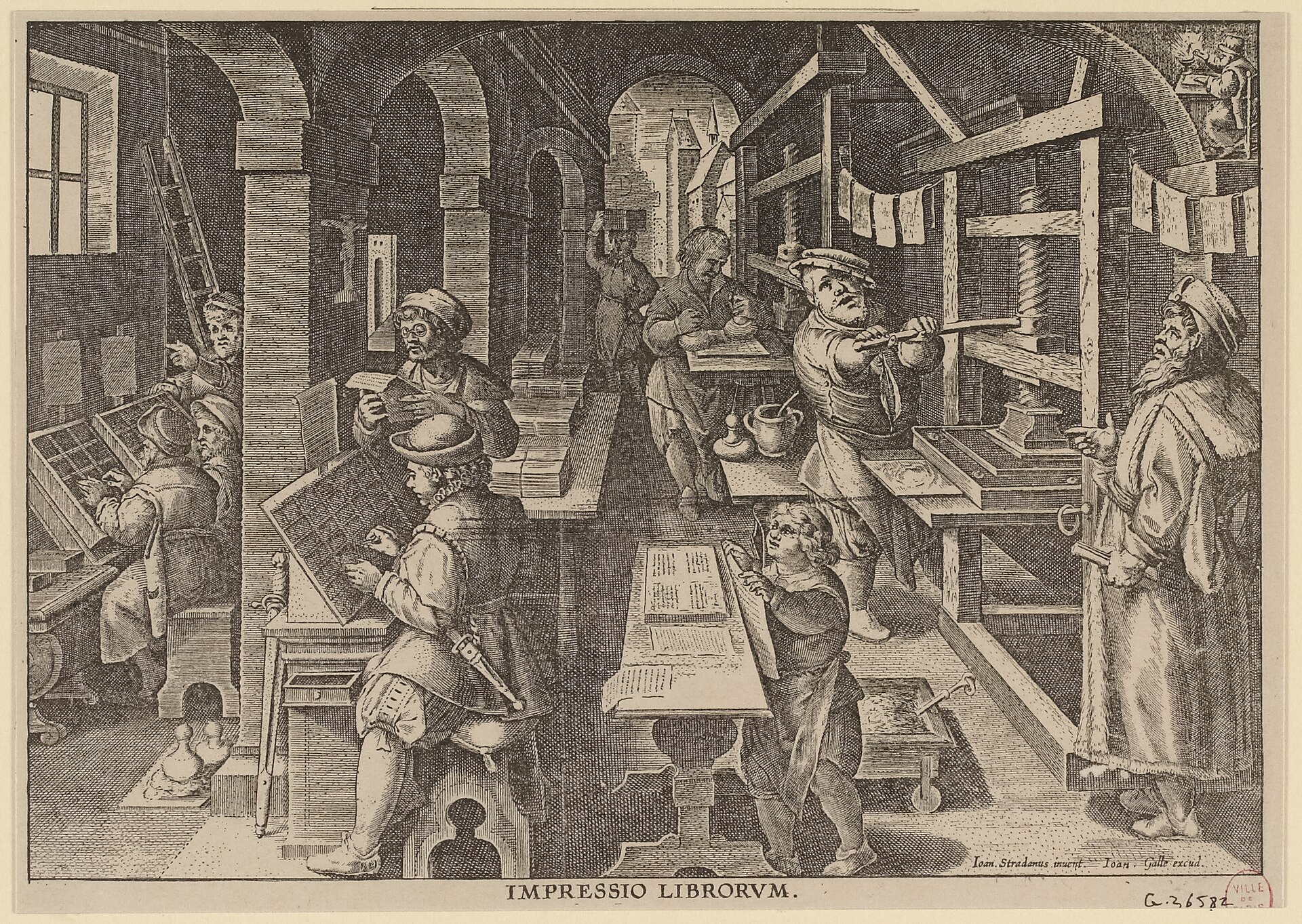
Engraving of a sixteenth-century printing house.

Protocol noteNote de protocole

A task score is the mean of its metrics among accuracy, f1, pearson, pearsonr, spearman, fquad and exact match. A value above 1 is divided by 100.Le score d’une tâche est la moyenne de ses métriques parmi accuracy, f1, pearson, pearsonr, spearman, fquad et exact match. Une valeur supérieure à 1 est divisée par 100.

A skill score is the mean of the tasks the model has. Missing tasks are never counted as zero. The overall score follows the live leaderboard.Le score d’une compétence est la moyenne des tâches du modèle. Une tâche manquante n’est jamais comptée comme zéro. Le score général suit le classement en ligne.

To check with the authors: the entry frblimp duplicates qfrblimp in all 101 results, so it is left out and counted once; in this snapshot the Quebec grammar test (qfrblimp) therefore cannot be told apart from the general one. The wsd metric also holds values below 1.À vérifier avec les auteurs : l’entrée frblimp duplique qfrblimp dans les 101 résultats ; elle est donc écartée et comptée une fois. Dans ce relevé, le test de grammaire québécoise (qfrblimp) ne se distingue donc pas de la version générale. La métrique wsd contient aussi des valeurs inférieures à 1.

The 23 tasks, grouped into seven skills.Les 23 tâches, regroupées en sept compétences.

Task listListe des tâches

Score per task for the six default models, two decimals, in percent.Score par tâche pour les six modèles par défaut, deux décimales, en pourcentage.
TaskTâcheSkillCompétenceMetricMétriqueClaude Opus 4(%)GPT-4o(%)Qwen3 14B(%)Meta Llama 3.1 8B Instruct(%)Llama 3.2 1B Instruct(%)Random guessingTirage au hasard(%)
AlloCinéFeelingsSentimentsAccuracy96.9294.4486.9482.3058.7850.44
MMSFeelingsSentimentsAccuracy75.6574.9272.3256.1834.0333.60
FraCaSReasoningRaisonnementAccuracy61.7958.2155.8240.9054.9330.15
GQNLI-FrReasoningRaisonnementAccuracy60.0066.6730.0036.6716.6726.67
LingNLIReasoningRaisonnementAccuracy69.5570.7554.2038.2233.1733.52
MNLI nineeleven FR-MTReasoningRaisonnementAccuracy70.3072.4060.8039.9533.1534.20
RTE3-FrenchReasoningRaisonnementAccuracy82.8879.0056.6241.7547.2534.12
SICK-FRReasoningRaisonnementPearson75.6480.0040.3858.5628.7033.31
XNLIReasoningRaisonnementAccuracy75.6371.9860.6838.3832.9734.29
DACCORDReasoningRaisonnementAccuracy95.0796.6261.8074.3749.9050.00
FQuADQuestionsQuestionsF1, exact match0.000.0022.008.153.480.00
French BoolQQuestionsQuestionsAccuracy94.9494.3856.7455.6247.7555.62
PIAFQuestionsQuestionsF1, exact match27.570.0022.007.471.493.26
MultiBLiMP-FrGrammarGrammaireAccuracy98.7098.7048.0562.3444.1651.95
QFrCoLAGrammarGrammaireAccuracy82.3182.8542.4965.5448.3049.46
QFrBLiMPGrammarGrammaireAccuracy88.6688.4757.2862.5749.3449.15
PAWS-XMeaningSensAccuracy79.0578.0055.2554.8552.5050.80
STS22MeaningSensPearson51.3947.2230.5637.5031.9430.56
WSD-FrMeaningSensExact match16.020.0070.4912.823.205.00
WiNo-X LMPronounsPronomsAccuracy91.3483.0357.7950.9151.6349.98
WiNo-X MTPronounsPronomsAccuracy82.1358.1750.5448.9650.3348.96
QFrCoREQuebecQuébécoisAccuracy93.4683.9433.4820.1415.939.93
QFrCoRTQuebecQuébécoisAccuracy97.6693.5728.079.3612.2812.28

ContactContact

To ask for an evaluation of your model, open an issue on the project’s GitHub page. We do not promise a delay, and each dated model version is evaluated once.Pour demander l’évaluation de votre modèle, ouvrez une demande sur la page GitHub du projet. Aucun délai n’est promis, et chaque version datée d’un modèle est évaluée une seule fois.

Open an issueOuvrir une demande